
How Foundry's Prompt Caching Cuts Costs by 90% on Repeat Inputs - And the Edge Cases That Silently Break It
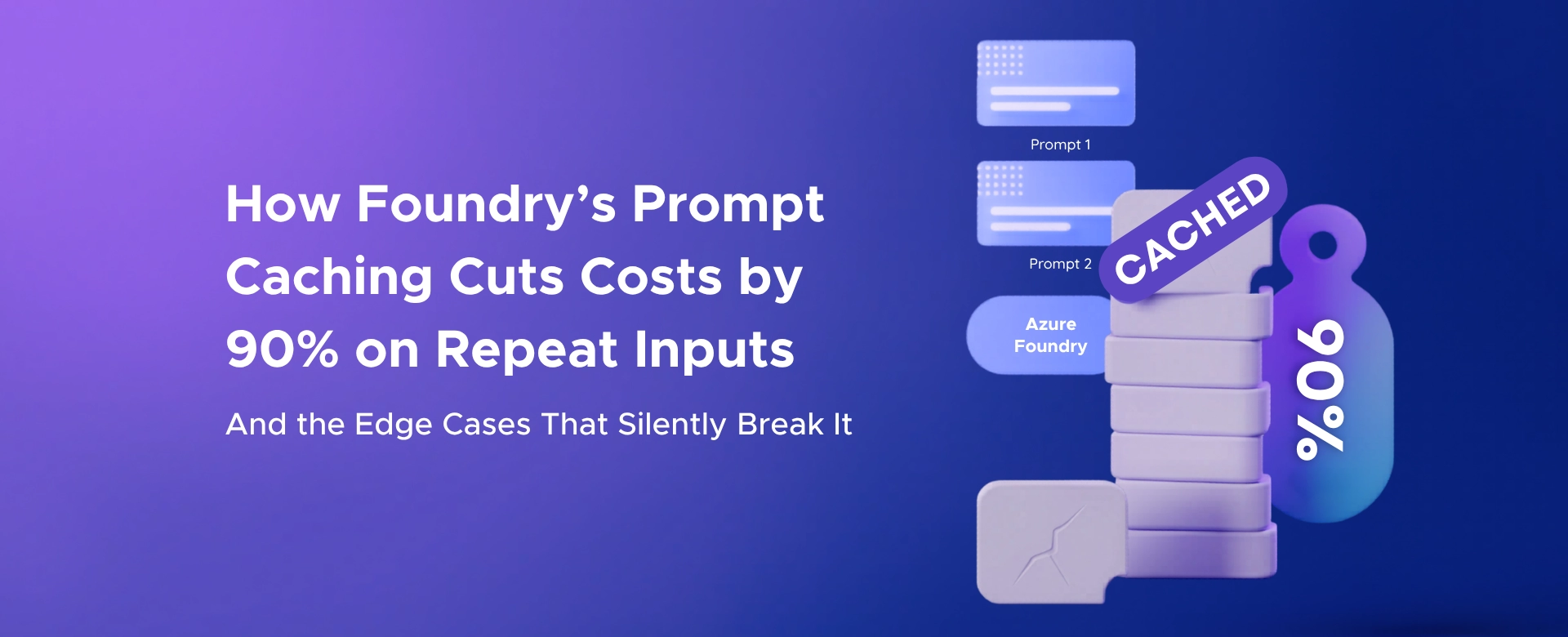
Prompt caching can cut Azure Foundry input costs by up to 90% by reusing repeated prompt prefixes - if your...

Most AI agents fail for one simple reason.
They forget.
They forget context. They forget users. They forget what they were doing.
And that’s fine for demos.
It breaks completely for long‑running, production agents.
Azure Foundry solves this by turning agents from stateless chatbots into stateful systems.
But to understand how it works, you need to understand three things:
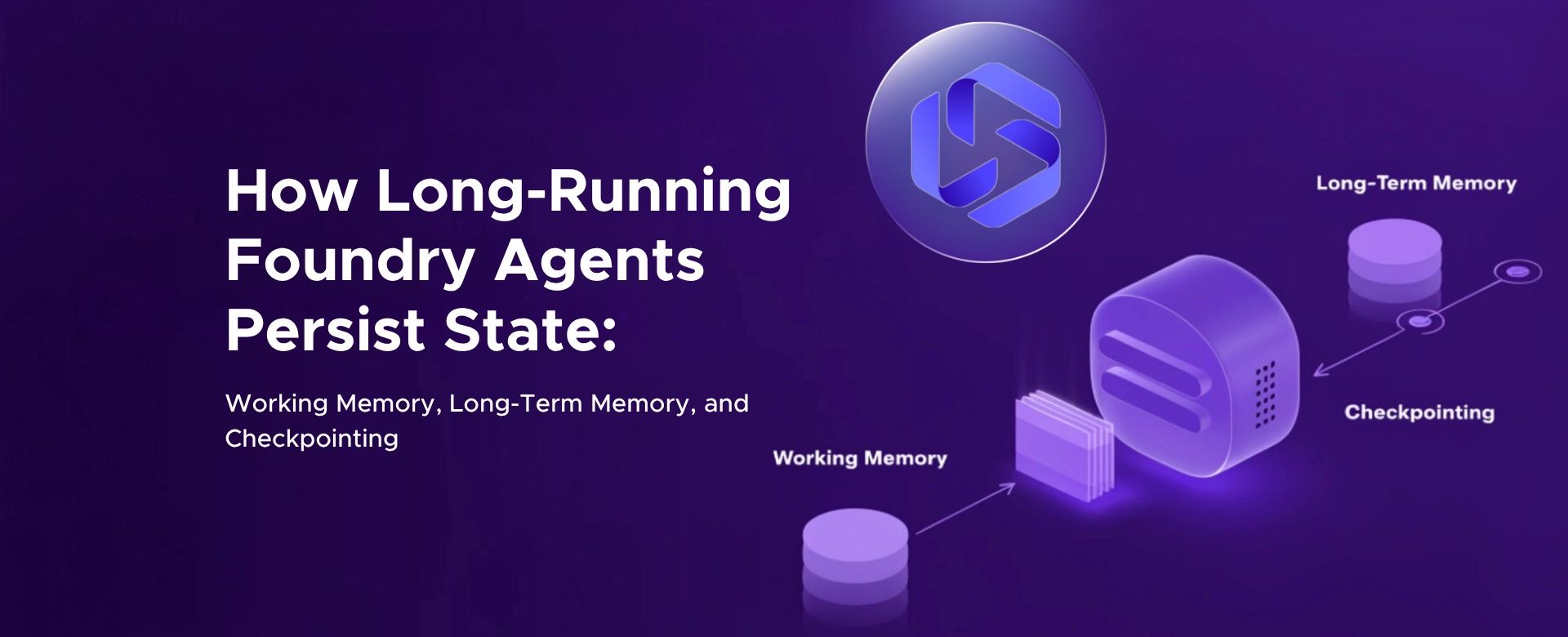
Working memory Long‑term memory Checkpointing
By default, LLMs are stateless.
Every request is independent. No memory. No continuity.
If you want an agent to:
Continue tasks over time Maintain context Remember users Recover from failures
You need a state layer.
That’s exactly what Foundry introduces.
Working memory is the active context of the current session.
Think of it as:
Conversation history Intermediate tool outputs Temporary reasoning context Files uploaded during the session
It exists while the task is active.
Foundry uses sessions.
A session is a stateful sandbox tied to a specific interaction.
Inside that session, the platform persists:
Files Temporary state Runtime context
Even across idle periods.
That’s how the agent can pause and resume without losing its working state.
Without working memory:
Agents repeat questions Lose context mid-task Break multi-step workflows
With working memory:
Agents can pause, resume, and continue tasks naturally.
Working memory solves “what’s happening now.”
Long-term memory solves:
What should the agent remember beyond the current session?
Foundry introduces managed memory stores for this.
Not everything.
Only meaningful, durable information like:
User preferences Key facts from conversations Summaries of interactions Important workflow outcomes
This turns repeated user interactions into reusable context.
The long-term memory lifecycle looks like this:
Extraction The system identifies important information worth keeping.
Consolidation It merges duplicates and resolves conflicts.
Retrieval It brings the most relevant memories into future interactions.
That’s how the agent stops behaving like a goldfish.
Agents become:
Context-aware across sessions Personalized without re-asking questions Capable of adapting over time
Instead of:
“Start from scratch every time”
They behave like:
“Continuous systems”
Working memory = Temporary context Long‑term memory = Persistent knowledge
Working memory = Per session Long‑term memory = Across sessions
Working memory = Fast and volatile Long‑term memory = Durable and structured
Both are required.
Not interchangeable.
This is the most overlooked part.
And the most critical for production.
Because long-running agents don’t just think.
They:
Call APIs Trigger workflows Modify systems Wait for approvals Run for minutes or hours
Now imagine the process crashes halfway.
What happens?
Everything restarts.
Duplicate API calls Repeated workflows Lost progress Inconsistent state
This is where most AI systems fail.
Not because the model is wrong.
Because execution is fragile.
Checkpointing saves:
Execution state Completed steps Pending tasks Where to resume next
Think of it like a save point in a game.
The agent doesn’t restart.
It resumes.
Long‑running agents are workflows.
Workflows need:
Reliability Recovery Control
Checkpointing helps prevent:
Double execution Lost progress Unsafe retries
It is what turns “agent demos” into “agent operations.”
Here’s the real architecture:
Working memory keeps the current task alive. Long‑term memory keeps knowledge alive. Checkpointing keeps execution alive.
Together, they turn:
A stateless conversation into A stateful system
They think memory equals chat history.
That’s not enough.
Production agents need:
Session state Persistent knowledge Execution recovery
Skip any one of these and you get:
A good demo A bad production system
Foundry is not just making agents smarter.
It is making them:
Persistent Recoverable Context-aware
Which is the difference between:
A chatbot and A system that actually does work
If you’re building agents on Foundry and thinking about:
How to persist state across workflows How to design memory without exploding token costs How to recover long-running processes safely
We can share a practical architecture approach used in real deployments.
Feel free to contact us.
Prompt caching can cut Azure Foundry input costs by up to 90% by reusing repeated prompt prefixes - if your...

Unified governance for AI agents - Azure Foundry Control Plane gives CIOs full visibility, compliance, and control to expose risks...
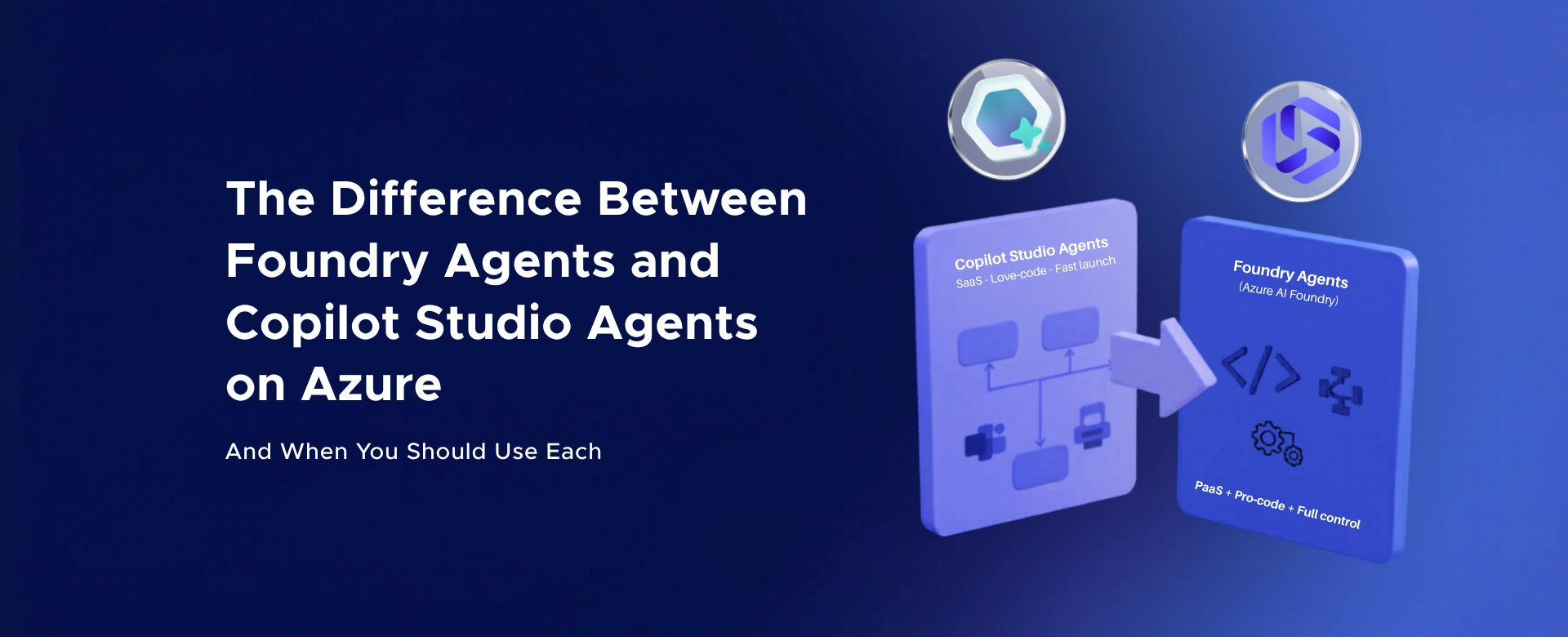
A clear breakdown of Foundry hosted vs self-managed agents on Azure - understand control, scalability, and when each model fits...