Not Every Enterprise Problem Needs the Largest Model in Azure AI
Bigger AI models aren’t always better for enterprises. Discover how right-sized Azure AI models drive efficiency, governance, and real business...

In many organizations, AI still lives in the margins.
A pilot here. A proof of concept there. Something “innovative” running quietly alongside real systems.
That mindset works in low‑risk environments.
It does not work in regulated industries.
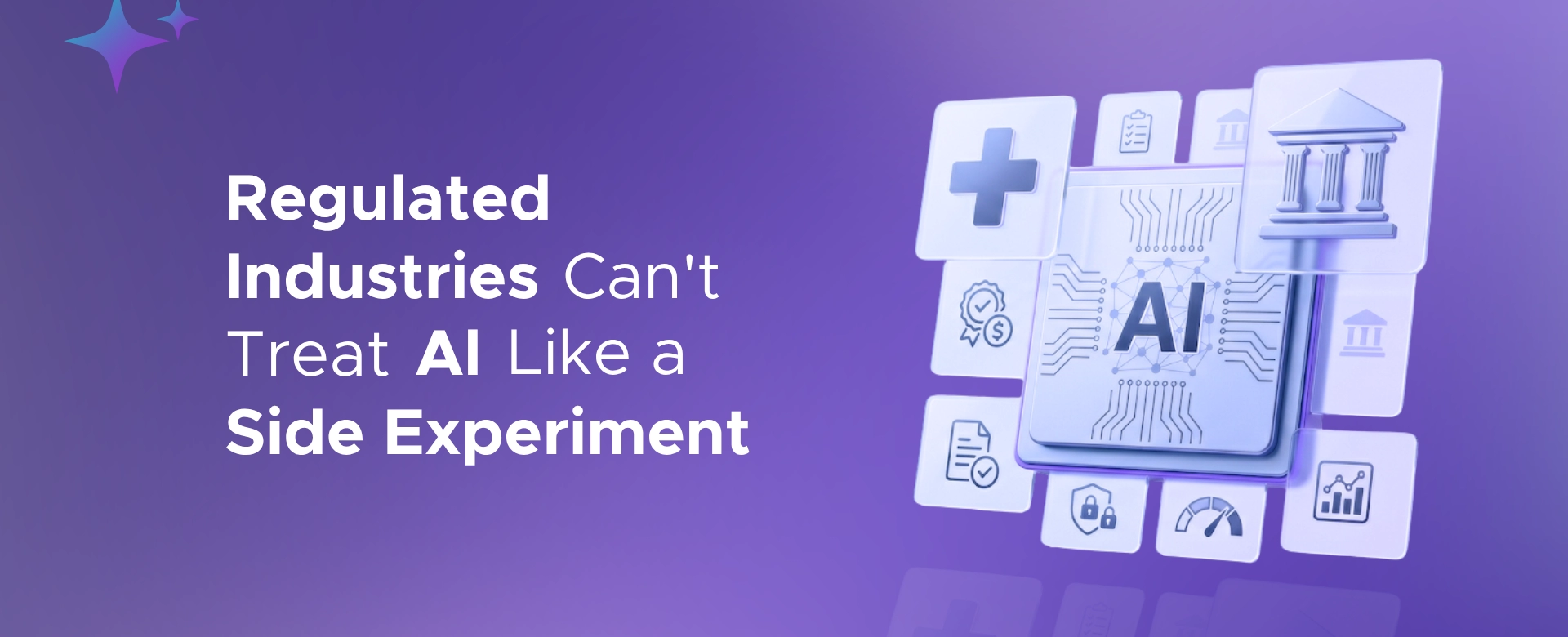
Healthcare, finance, legal, insurance, and public sector organizations cannot afford to treat AI as a side experiment that governance will “catch up with later.”
Later is usually too late.
In regulated industries, AI does not just assist work.
It influences:
When AI output affects regulated data or regulated decisions, three things matter immediately:
AI that lacks these qualities introduces risk faster than it delivers value.
The most common mistake is not choosing the wrong model.
It’s assuming governance can be added after success is proven.
This often looks like:
At pilot scale, this feels manageable.
In regulated environments, the moment AI is trusted or scaled, these gaps become compliance liabilities.
AI systems behave differently from traditional software.
They:
That makes retroactive governance extremely difficult.
If guardrails are not designed from day one:
At that point, AI adoption often stalls, not because of regulation, but because confidence is lost.
Strong AI governance is often misunderstood as slowing innovation.
In reality, it enables scale.
In regulated industries, governance should cover five areas from the start.
Clear understanding of:
If data legitimacy is unclear, the AI system is on borrowed time.
AI does not need to explain every internal calculation.
It does need to:
Without this, regulatory and legal defensibility is weak.
Someone must remain responsible for AI‑assisted outcomes.
Not “the model.” Not “the vendor.” A clearly assigned role.
Human‑in‑the‑loop is not a checkbox. It is a governance boundary.
In regulated environments, “it worked at launch” means very little.
Production AI requires:
Without these, organizations cannot prove control over time.
Every AI system needs:
If AI ownership is shared informally, it usually means it is owned by no one.
Azure AI integrates directly into enterprise workflows, data stores, and identity systems.
That is a strength.
But it also means:
Azure AI rewards organizations that treat governance as a design input, not an afterthought.
It exposes those that don’t.
In regulated industries, AI success is not about how impressive the demo looks.
It is about whether leadership can confidently answer:
If those answers are unclear, the AI system is not production‑ready, no matter how accurate it seems.
Regulation does not block AI adoption. Lack of governance does.
If you’re a CXO or risk, compliance, or technology leader in a regulated industry and you’re seeing:
it may be time to redesign AI initiatives with governance baked in from day one.
I work with organizations to:
Feel free to contact us.
Bigger AI models aren’t always better for enterprises. Discover how right-sized Azure AI models drive efficiency, governance, and real business...
Most Azure AI projects stop at pilot success. This article explains why production fails - and what it truly takes...
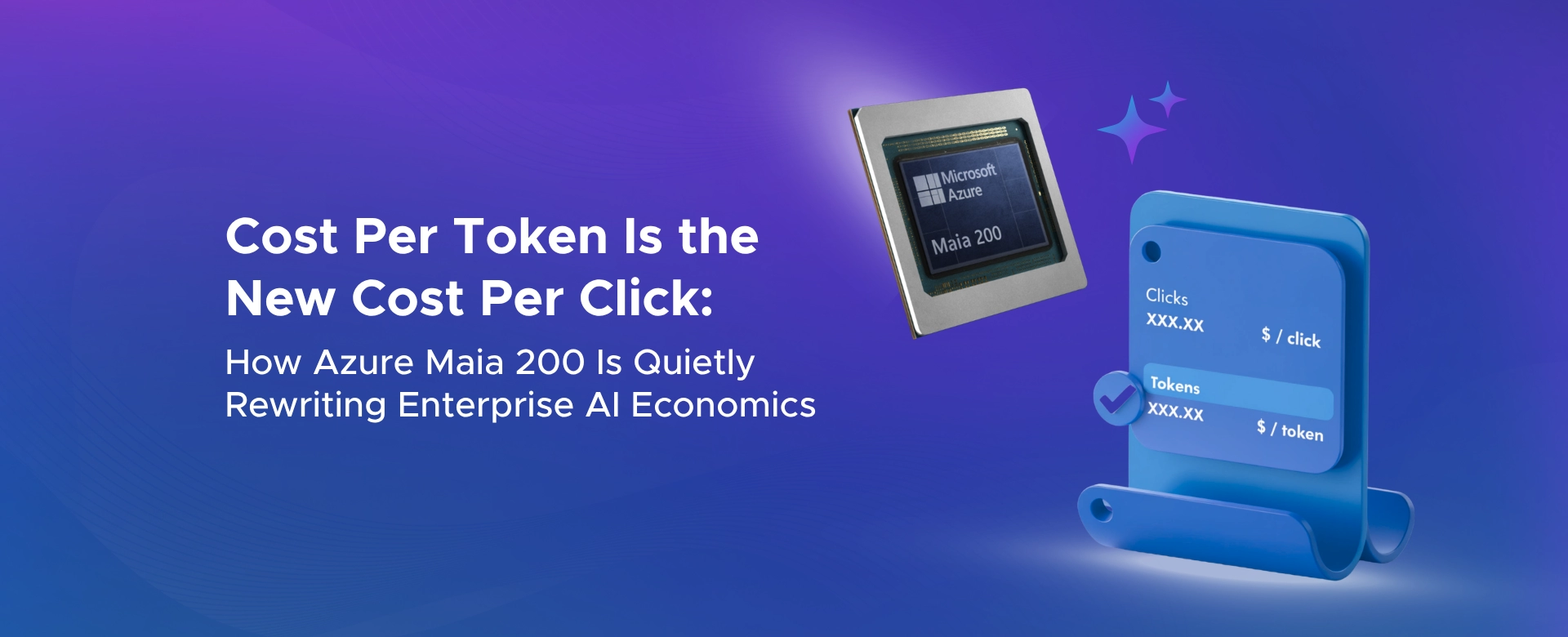
Cost per token is replacing cost per click. Azure Maia 200 quietly cuts AI inference costs, giving predictable, CFO-ready AI...